ServicesLand Clearing
Land Clearing in Lake Lure
We open up wooded lots for a new house, a drive or an addition. We walk the land with you, mark what stays, clear what has to go and leave the ground ready for grading. You get a plain answer on what it takes before any saw starts.
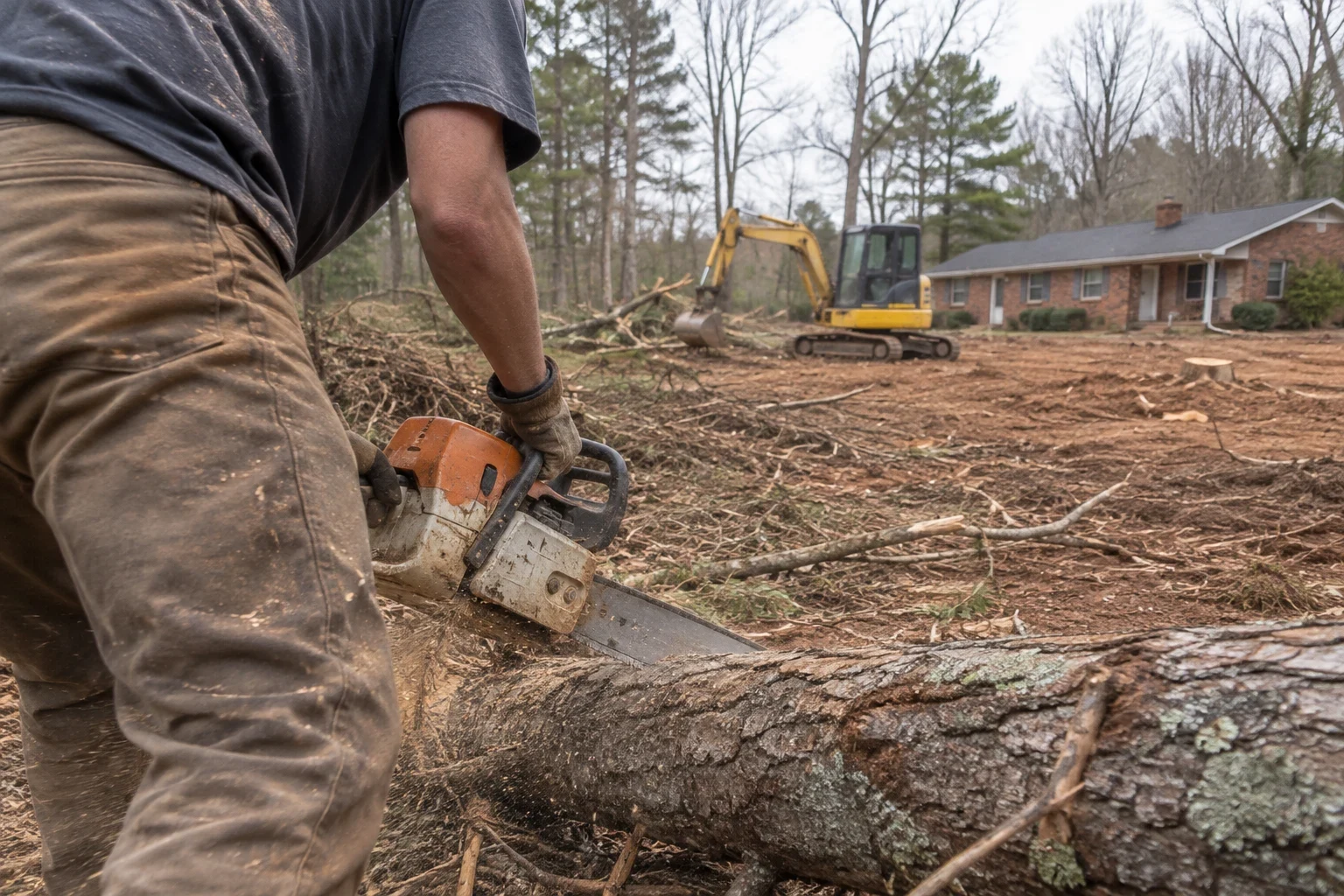
What land clearing is and when you need it
Land clearing is the first real work on a building lot. We take out the trees, brush, stumps and roots that sit where the house, drive, septic field and work area need to go. Done right, it leaves you with solid ground and a clear picture of what the site can hold.
Most lots around here are wooded and many sit on a slope. That means hardwoods with deep roots, rock just under the surface and red clay that turns to mud after a hard rain. We plan the clearing around those facts so you are not paying to fix washouts later.
We are licensed in North Carolina and South Carolina. When we also build your house, the clearing is laid out with the floor plan and foundation in mind from the first day.
What the work includes
- Marking what stays
- Before we cut, we walk the lot with you and flag the trees worth keeping. Good shade trees, privacy screens and anything that holds a steep bank are worth a second look.
- Tree and brush removal
- We take down trees inside the build zone and clear the undergrowth, vines and saplings. Dead or leaning trees near the house site come out too, since they are a risk once the framing goes up.
- Stump and root removal
- Stumps under a foundation, drive or septic field have to come out, roots and all. Buried wood rots and settles, and that shows up later as cracks and low spots.
- Debris handling
- Logs, limbs and stumps get chipped, hauled off or stacked for your firewood, depending on what you want and what the lot allows. We tell you the options up front.
- Erosion control
- Bare soil on a slope moves when it rains. We set silt fence and other basic controls so mud stays on your lot and out of ditches and creeks.
When a lot is ready for clearing
The house site is hidden by woods
If you can walk the property and still not picture where the house goes, it is too overgrown to plan. Opening a path and a pad area lets you and your designer judge the view, the sun and the slope.
A septic evaluation is on the calendar
The county has to get onto the lot and dig test holes before issuing a septic permit. Heavy brush slows that down or blocks it.
Dead or leaning trees close to the build
They put crews and a new roof at risk. Take them down before building starts, not once it is done.
Trucks can't get in
Concrete and lumber trucks need a firm, open path. If a pickup has trouble getting onto the lot, a loaded truck has no chance.
You are planning an addition
A new room, garage or porch often means removing trees and roots near the house. That calls for careful work so the existing foundation and yard stay intact.
What affects the price
Every lot clears differently, so we price yours after seeing it. The two biggest things are how much ground gets cleared and how tough it is to get machines onto it. You get the breakdown in writing so you can see where each dollar goes.
Acreage and how thick the trees are
Half an acre of young pines is not the same job as that ground covered in big oaks. Larger trees mean more cutting, more stumps and more to haul.
Grade and the way in
Steep land slows every step and can rule out some machines. A tight or soft entrance may need work before equipment can reach the lot.
Stumps and buried rock
Pulling stumps where the foundation goes costs more than grinding them in the yard. Rock turned up while digging roots adds hours.
Getting rid of debris
Chipping it on the lot, hauling it away or leaving you the logs all cost different amounts. Hauling tends to make the biggest difference.
Permits and erosion control
More disturbed ground means more silt fence, more stabilizing and at times a formal plan. It is a real cost, and it gets its own line.
The steps of a clearing job
- 1
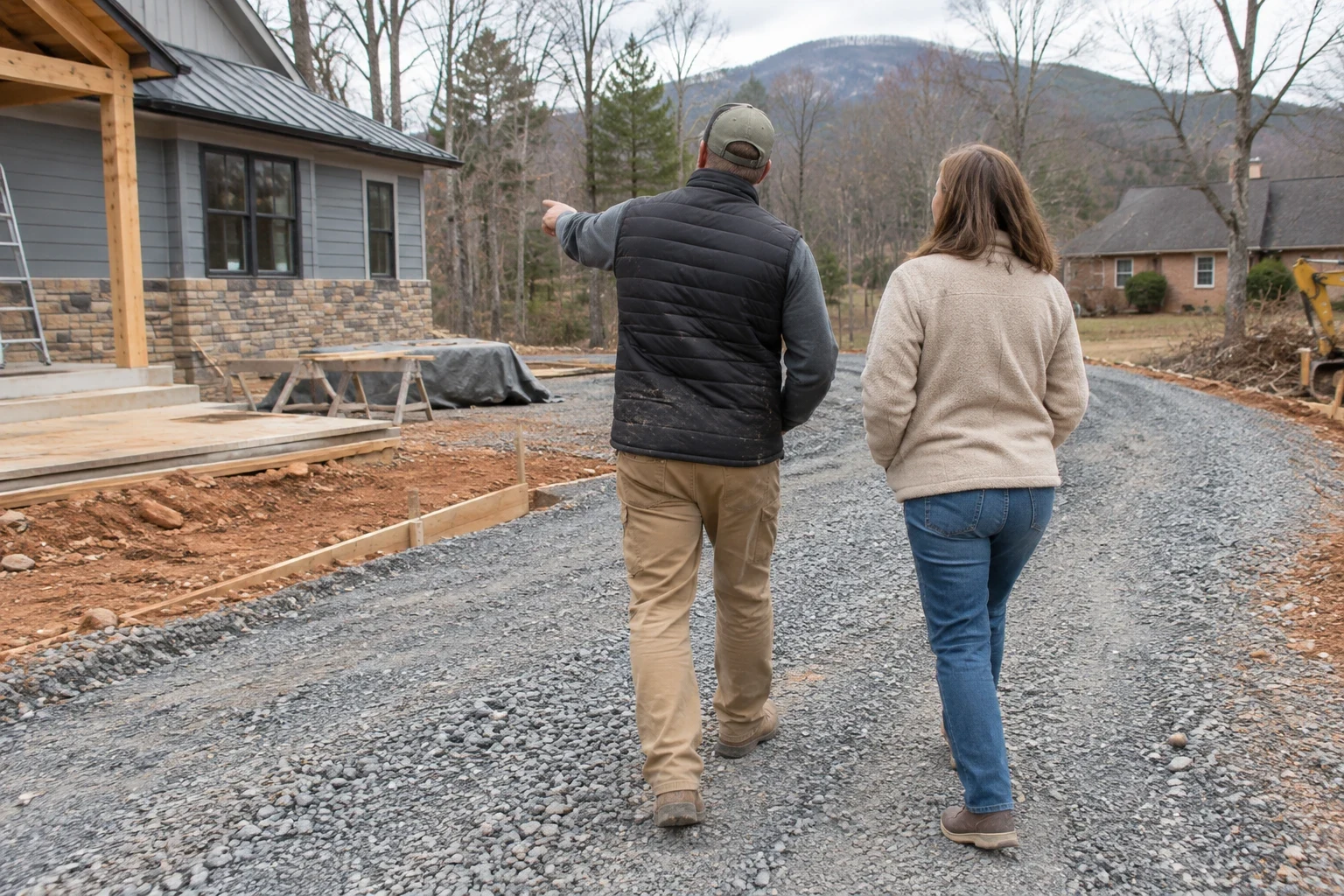
Walking the lot with you
We meet on your land and check the slope, the way in, tree size and soil, then talk over where the house, drive and septic area should go. You hear plainly what the job covers and what affects the price.
- 2
Staking and permits
We stake the edges of the clearing and flag the trees you are keeping. If the disturbed area is large enough to need an erosion control plan or a county permit, we handle that before anything starts.
- 3
Cutting and stump work
The crew fells trees, grinds or pulls stumps and clears out the brush. Erosion controls go up at the start, not at the end.
- 4
Cleanup and walk-through
Debris gets chipped, hauled away or stacked, whichever we agreed on. Then we walk the cleared area with you before grading begins.
Questions about clearing a lot
Do I need a permit before you start clearing?
It depends on how much ground gets disturbed and the rules where your property is. A small clearing may need little or nothing, while a larger one can require a formal erosion control plan. We check what applies to your lot first and handle whatever paperwork is needed.
Can some trees stay?
Yes. We mark them together on the site walk and keep equipment off their roots as far as the work allows. If a favorite tree is too close to the foundation to make it, we will say so.
Where do the wood and stumps go?
We can chip and spread it, haul it away, or cut and stack logs for firewood. Stumps under the house and driveway are removed entirely. We walk you through each option and what it does to the price.
How long will clearing take?
A small, open lot can be done in a few days. Steep, thickly wooded land takes longer, and rain can stop work on clay. Once we have walked the site, we give you a realistic time frame.
Does land clearing include grading?
They are linked but separate. Clearing removes what is on top of the ground, and grading shapes the ground for drainage and the house pad. We do both, and the Grading page covers that part of the job.
Do you warranty clearing work?
We do. Clearing work comes with a 1-year warranty on workmanship. If something we did is off, call us and we will come take a look.
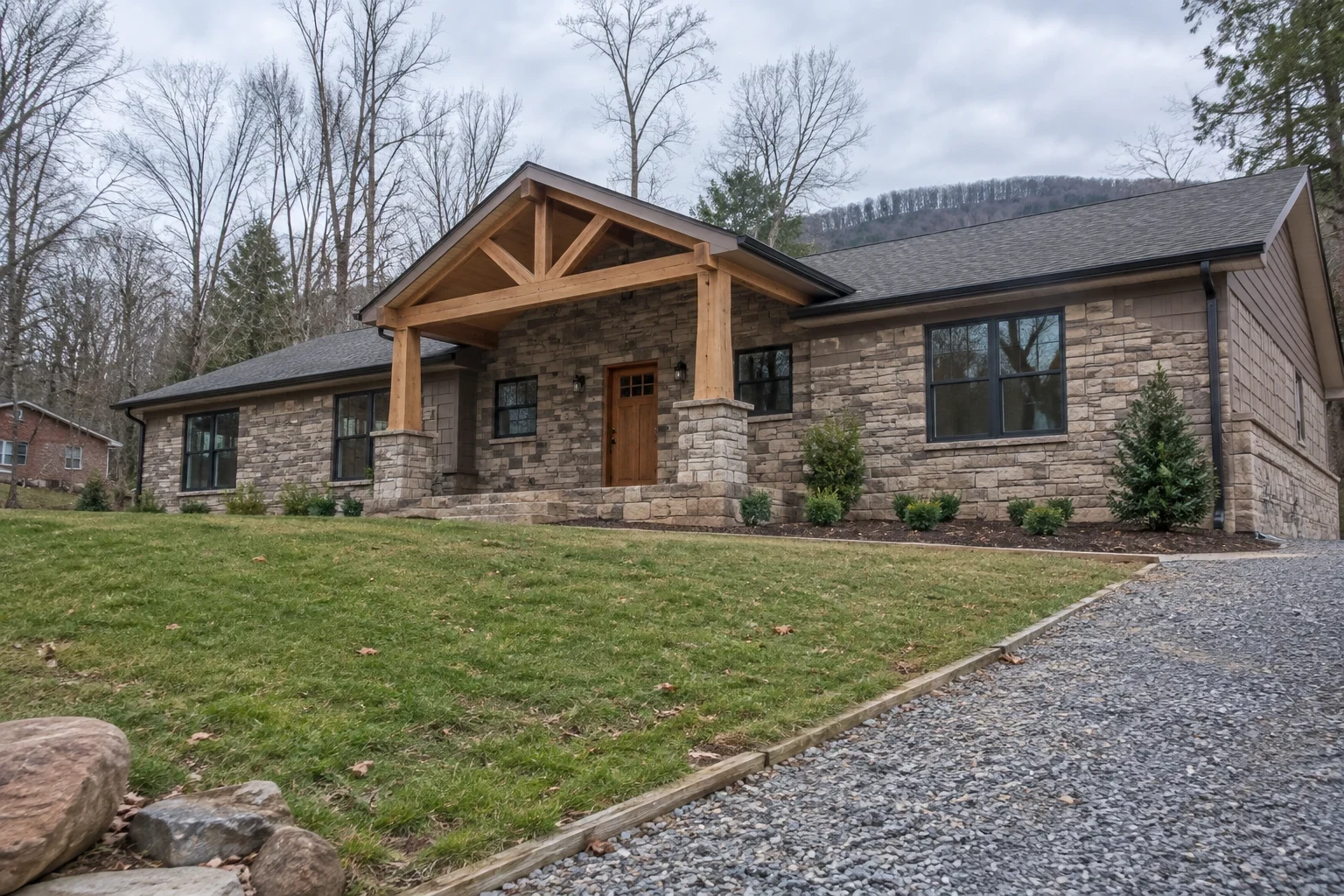
Ready to see what your lot can hold
We will walk the land with you, mark what stays and give you a straight answer on scope and cost. It is the first step toward a solid build.