ServicesFoundation Work
Lake Lure Foundation Work
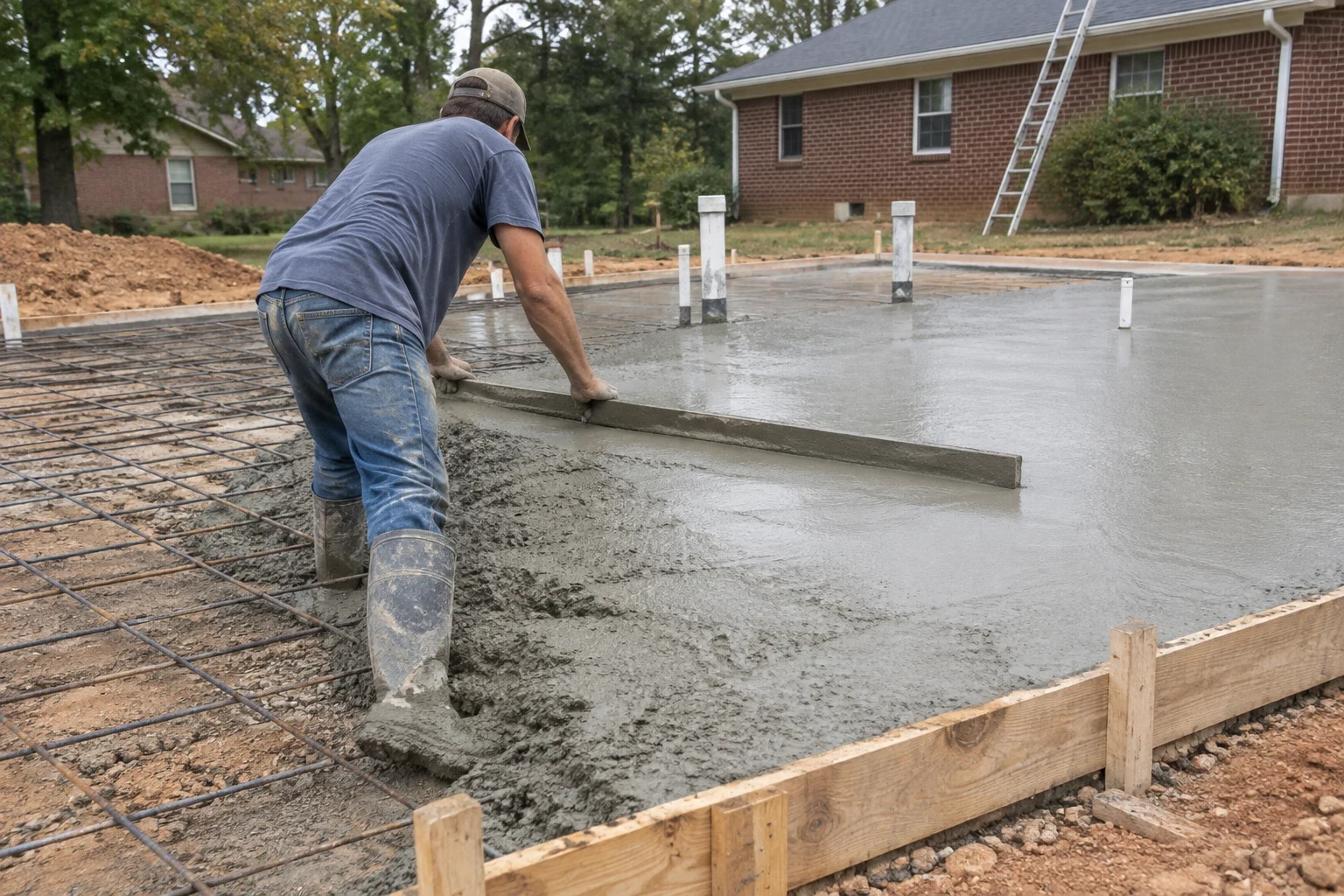
We excavate, form and pour foundations for new custom homes and additions, and we repair foundations that crack or let water in. You get an honest read on what your lot calls for, what pushes the cost and which choices are worth making.
What foundation work covers
Everything above the foundation depends on it. If the footings sit on soft fill or water has nowhere to go, the framing moves, doors bind and drywall cracks. Most of those problems trace back to the ground under the house, not the house itself.
On a sloped mountain lot that usually means a crawlspace or basement with stepped footings and tall walls on the downhill side. Flatter ground can take a slab. We look at your lot, your floor plan and how water moves across the site, then tell you which type fits and why.
We are licensed in both North Carolina and South Carolina. Pulling the foundation permit and lining up the inspections is part of our job, not something you have to chase.
What the job includes
Layout and excavation
We stake the footprint from your plans and dig to firm, undisturbed soil. If we hit rock or soft spots, we show you and explain the fix before going further.
Footings and steel
Footings are formed, set with rebar and inspected before any concrete goes in. Stepped footings follow the slope so each section bears on solid ground.
Walls or slab
Block or poured walls for crawlspaces and basements, or a slab on a compacted gravel base. Anchor bolts and vents go in where your framing and code call for them.
Waterproofing and drainage
Damp-proofing or waterproofing on the outside of the walls, a footing drain in gravel, and a clear outlet for that water. This step is cheap now and very expensive later.
Backfill and rough grade
We backfill in layers and slope the ground away from the walls. If the whole site needs shaping, our grading work picks up from there.
Repairs to existing foundations
Cracked block, a wall bowing inward or a wet crawlspace. We find the cause first, usually water or settling, and fix that along with the damage.
Signs it's time to call about your foundation
You have land and a plan
If your lot is cleared or close to it and you have a floor plan, the foundation is the next real decision. It is worth settling before you finalize framing details.
An addition is on the table
A new room needs its own footings tied to the existing house at the right depth. Getting that wrong is how additions pull away from the main structure.
Cracks that are growing
Hairline cracks in concrete are common. Stair-step cracks in block, cracks wider than a coin or ones that keep getting longer mean something is moving.
Doors and windows start sticking
When several openings bind at once, or floors slope where they used to be level, the problem is often under the house.
Water in the crawlspace or basement
Standing water, damp walls or a musty smell after rain point to missing or failed drainage. Left alone, it rots framing and invites mold.
How a foundation job runs
- 1
Consultation and site visit
We walk the lot or the existing house with you, look at the slope, soil and drainage, and go over your plans. You leave knowing which foundation type we recommend and what will move the price.
- 2
Written estimate and permit
Your estimate breaks the job into separate lines for digging, concrete, block, drainage and backfill, so each cost is easy to check. Once you sign off, we file for the permit.
- 3
Dig, form and inspect
Excavation and footing forms usually take a few days, depending on rock and weather. The inspector checks the footings and steel before we pour.
- 4
Pour, waterproof and backfill
Walls or slab go in, then waterproofing and drains, then backfill. We clean up the site and leave it ready for framing or for the remodel to continue.
- 5
Follow-up
Our workmanship comes with a 1-year warranty. If something we built isn't right in that first year, you call us and we come back.
What moves the cost of foundation work
We don't quote foundations off the phone because the ground decides a lot of it. Here is what makes the biggest difference, so you know what to ask about when you see our estimate.
- Slope of the lot
- Steeper lots need taller walls on the low side and more stepped footings. That means more concrete, more block and more labor.
- Rock and soil
- Rock may need breaking or removal. Soft fill or clay that holds water may need deeper footings or extra gravel.
- Foundation type and size
- A slab costs less than a crawlspace, and a full basement costs more than either. Square footage and the shape of the floor plan add up too.
- Drainage needs
- A dry lot needs a basic footing drain. A wet one may need more pipe, more gravel and a longer run to daylight.
- Access for equipment
- Narrow drives and tight sites slow down excavators and concrete trucks. Sometimes concrete has to be pumped, which adds a line to the bill.
Common foundation questions
Something not covered here? (828) 528-4228
Which is right for me: slab, crawlspace or basement?
Your slope and your budget decide most of it. A sloped lot tends to work best with a crawlspace or walkout basement, because the downhill side already sits partly above grade. A flat lot that drains well can take a slab. We will say which one suits your land and how their costs compare.
Should I worry about a crack in my foundation?
It depends on the crack. Thin vertical lines from concrete shrinkage are expected. Wide cracks, stair-step cracks, cracks that let water in or ones that keep spreading deserve a look, since they usually point to water pressure or settling. We will tell you straight which kind you have.
Do you take care of permits and inspections?
We do. We get the permit and book the footing and foundation inspections. No concrete goes in until the inspector approves the footings.
Will you pour the foundation if another builder does the house?
Ask us. Foundations are part of our custom home building and additions, and a foundation-only job is something we can talk over at your consultation.
Does the foundation come with a warranty?
It does. Our workmanship carries a 1-year warranty. If anything we built fails to hold up during that year, we return and fix it.
Get the foundation question settled
Tell us about your lot or the problem you're seeing. We'll set up a project consultation, look at the ground and give you a straight answer on options and cost drivers.