ServicesFlooring Installation
Flooring Installation in Lake Lure, NC
We install hardwood, engineered wood, luxury vinyl plank and tile in new builds and remodels. Before any new floor goes down, we check that the subfloor is flat, dry and solid, because that decides how long the floor lasts. You get a plain answer on what fits your house.
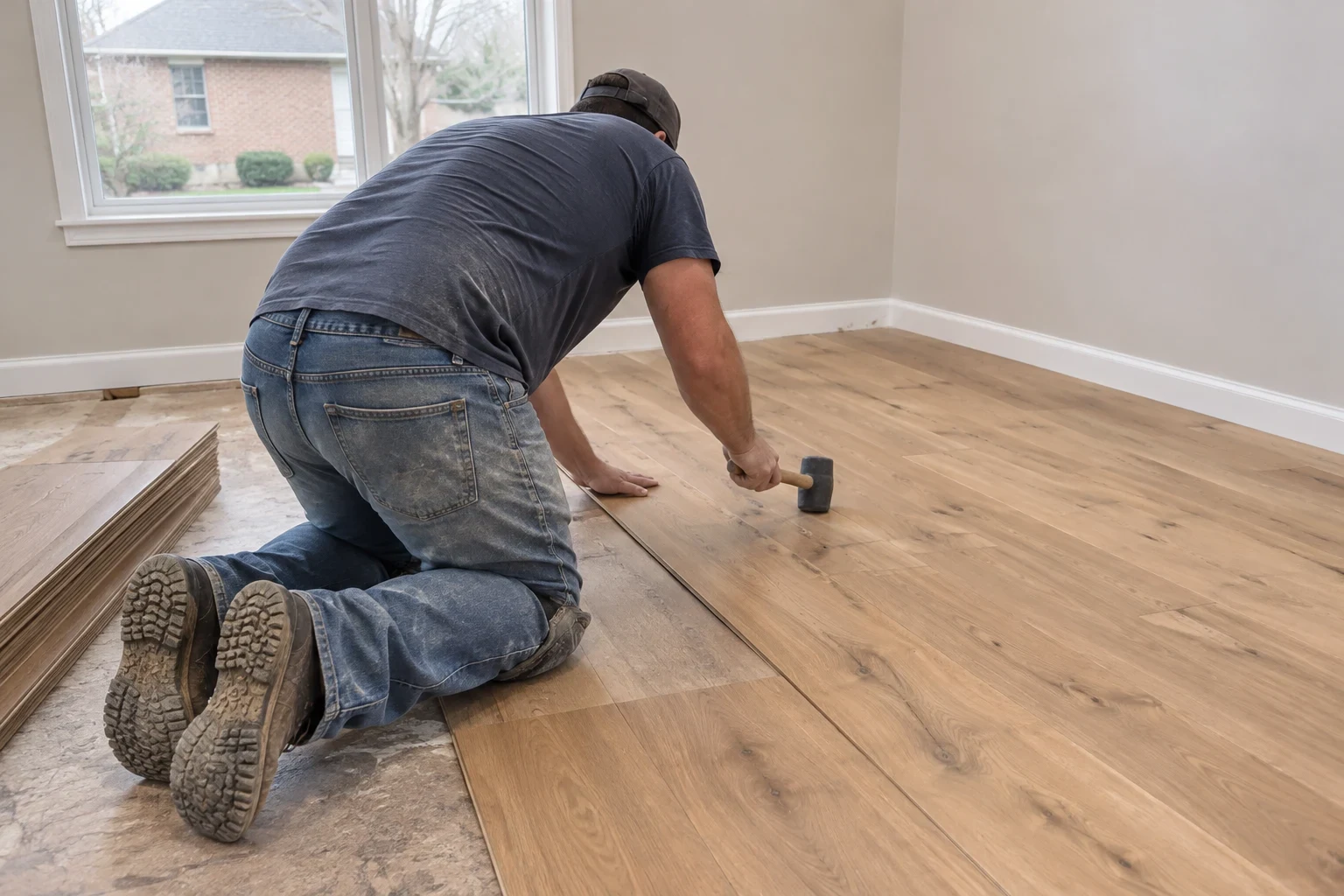
What flooring installation covers
Floors are the part of a house you see and walk on every day, so they get judged hard. We put down new flooring in the custom homes we build, during a remodel, or as a stand-alone job in a house that just needs new floors.
Most floor problems start below the floor. A subfloor that dips, squeaks or holds moisture will show through any new material. In the damp mountain air around Lake Lure, crawlspace humidity is the usual cause of cupped wood and lifting planks, so we look there first and tell you what we find.
If the floor you have in mind is wrong for the room, we say so. Then we lay out the options that will hold up and what each one costs to do right.
What the work includes
- Subfloor check and repair
- We check the floor with a long straightedge and a moisture meter and mark high spots, dips and loose sheathing. Squeaks get screwed down. Soft or water-damaged plywood gets cut out and replaced before anything new goes over it.
- Removing the old floor
- We pull up carpet, pad, tack strip, old vinyl or tile and haul it off. Glued-down flooring can take longer to remove than the new floor takes to install, and we tell you that up front.
- Hardwood and engineered wood
- Solid hardwood gets nailed to a wood subfloor. Engineered wood can be nailed, glued or floated, which makes it the better pick over concrete or in rooms with bigger humidity swings.
- Luxury vinyl plank
- LVP is waterproof on top and does well in kitchens, baths and basements. It still needs a flat subfloor, or the locking joints work loose over time.
- Tile
- We set tile over cement board or an uncoupling membrane, not straight onto plywood. That is what keeps grout lines from cracking as the house moves through the seasons.
- Trim, transitions and stairs
- We reset or replace baseboard and shoe molding, fit thresholds between rooms and trim doors that would drag on a thicker floor. Stair treads and nosings are matched to the new floor.
Signs it is time for new floors
Soft spots underfoot
If part of the floor gives when you step on it, the subfloor may be rotting or a joist may be weak. That needs a look before new flooring goes in, not after.
Cupping or gaps in wood
Boards that curl up at the edges usually point to moisture from below. Wide gaps every winter point to dry indoor air. Both tell us what the next floor needs.
Cracked tile or grout
Cracks that run across several tiles often mean the floor underneath is flexing. Swapping out the broken tiles alone will not fix it.
A finish you can't sand again
Solid hardwood can be refinished several times, but once the wear layer is gone, it is done. Engineered floors with thin veneers often can't be sanded at all.
A remodel already underway
If you are opening up a kitchen or moving walls as part of home remodeling, that is the right time to change floors so everything lines up at the same height.
How a flooring job runs
- 1
Consultation and measuring
We look at the rooms, check the subfloor and moisture, and talk through materials. You get a written estimate with each part of the job listed.
- 2
Delivery and acclimation
Wood flooring is brought in and left inside for several days so it adjusts to your home's temperature and humidity. Skipping this step is a common reason new floors gap or buckle.
- 3
Prep day
We cover doorways and vents to keep dust down, move what we agreed to move, pull the old floor and fix the subfloor.
- 4
Installation
We lay out each room so rows run straight and the narrow cut pieces land at walls, not in a doorway. Tile gets time to set before grout goes in.
- 5
Trim, cleanup and walk-through
Trim goes back on, transitions go in, and we clean up and haul off the scraps. Then we walk the floor with you and fix anything you point out.
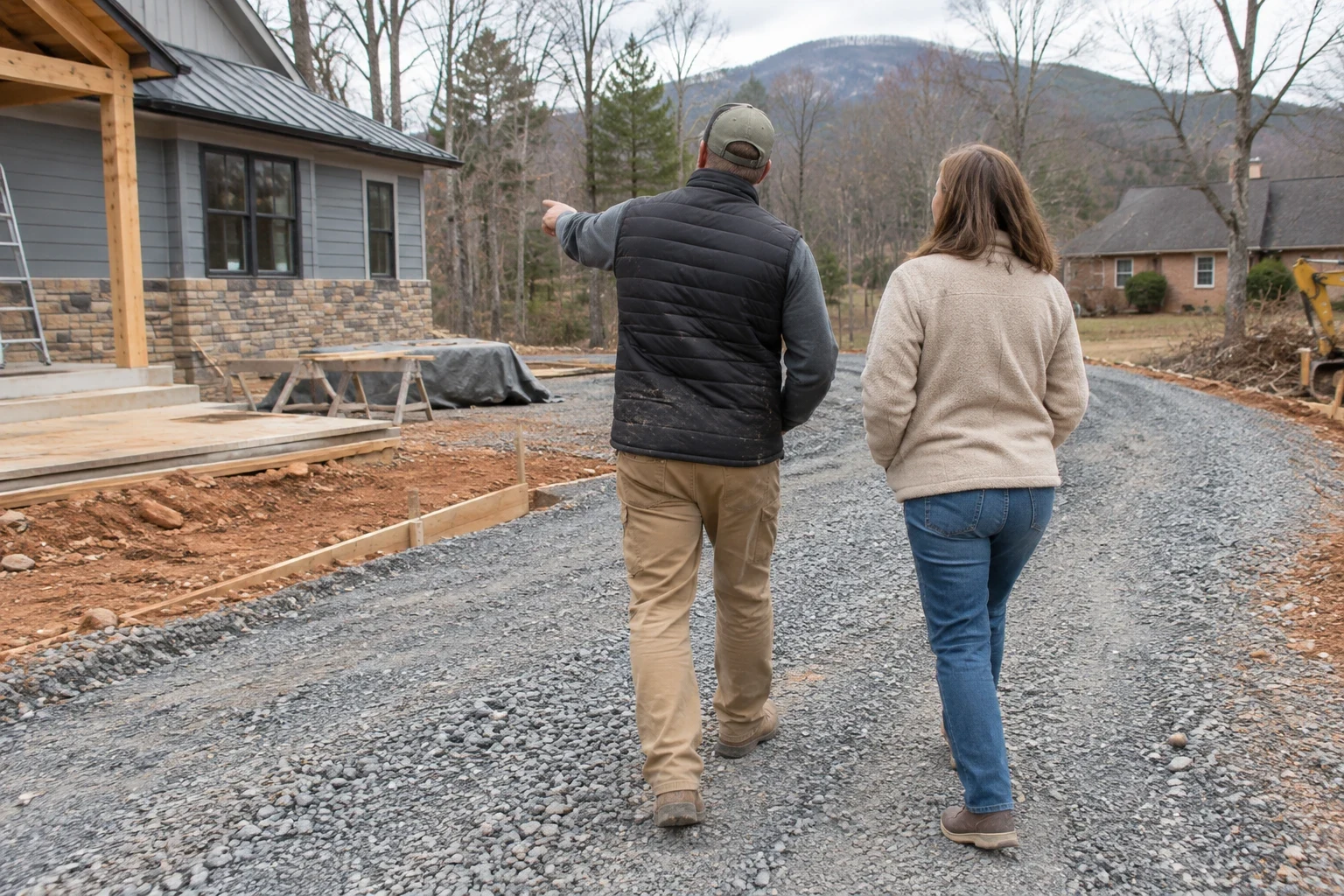
What moves the price
Flooring cost comes down to square footage, the material you pick and how much work the floor needs before the new layer goes down. The prep is the part people underestimate. We put it in writing so you can see each piece.
- Material
- Tile and solid hardwood cost more to buy and take longer to install than LVP. Within each type, thickness and wear layer move the price.
- Subfloor condition
- A flat, dry subfloor keeps cost down. Leveling compound, new plywood or moisture fixes in the crawlspace add to it, and sometimes we can't see how much until the old floor is up.
- Old floor removal
- Carpet comes up fast. Glued vinyl, tile set in mortar or several layers of past floors take more labor and more disposal.
- Layout and stairs
- Open rooms go quickly. Many small rooms, angled walls, patterns like herringbone and stairs mean more cuts and more hours.
Flooring questions we hear
Something not covered here? (828) 528-4228
Can you put new flooring over my old floor?
Sometimes. LVP can go over sound, flat vinyl or tile if the added height works with doors and cabinets. Carpet always comes up. After checking the existing floor, we will tell you whether going over it holds up or just causes trouble later.
Is hardwood a bad idea in a lake house?
Not always, but it needs a dry crawlspace and steady indoor humidity. Engineered wood handles swings better than solid. If the space stays damp, LVP or tile is the safer pick, and we will say so.
How long will my rooms be out of use?
It depends on the size of the job and the material. LVP in a few rooms goes faster than tile, which needs time to set before grout and foot traffic. We give you a schedule with the estimate so you can plan around it.
Do you stand behind the installation?
Yes. Our flooring work comes with a 1-year warranty on workmanship. If a problem shows up from how we put the floor down, call us and we will come look at it. Defects in the material itself fall under the manufacturer's coverage.
Do you work outside Lake Lure?
Yes. We install floors in Rutherfordton, Spindale, Hendersonville and other towns nearby. We are licensed in both North Carolina and South Carolina, so work across the state line is on the table too.
Talk through your floors with us
Tell us the rooms, what is down now and what you are thinking of putting in. We will go over the options, what drives the cost and what the subfloor may need.