ServicesGrading
Grading in Lake Lure
We grade house pads, driveways and yards so the ground is stable and water drains away from your home. You get a plain answer on what your lot needs, what drives the cost and what can wait.
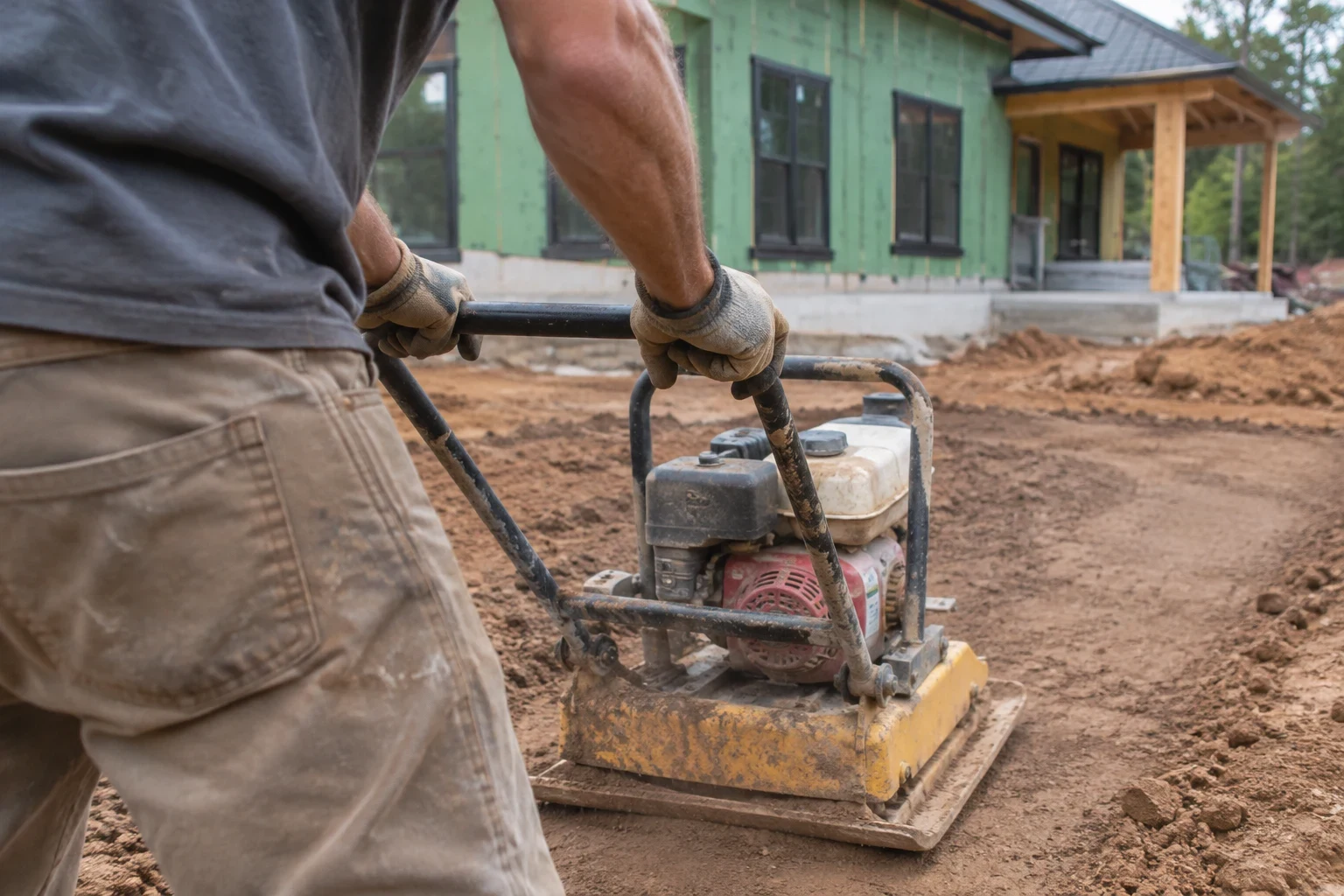
Getting the ground right before anything else
Grading is shaping soil to a set slope and packing it firm. On a new lot, it gives the foundation a level, compacted pad and gives you a driveway you can still climb in winter. On a home you already live in, it corrects ground that sends water toward the house.
Most wet crawlspaces start with the dirt, not the gutters. When the soil next to the foundation sits flat or tips inward, each heavy rain soaks under the house or presses on the walls. Often a few inches of fall in the right direction is all it takes.
We hold licenses in both North Carolina and South Carolina. We grade for our own custom home builds, and we take it on as a stand-alone job when you only need the yard or driveway set right.
What our grading work covers
- House pad grading
- We cut and fill to the elevation on your plans, then compact in layers so the pad does not settle under the foundation. On sloped lots this is where most of the dirt moves.
- Finish grading around the house
- We set the soil to fall away from the foundation on all sides. That slope is what keeps water out of the crawlspace.
- Driveway grading
- We shape the driveway base, set a grade a car can handle and crown or tilt it so water sheds off the surface instead of running down the middle.
- Swales and drainage paths
- Shallow channels carry runoff around the house and toward a safe outlet. We place them where the water already wants to go.
- Erosion control
- Silt fence, straw and seed go in so bare soil does not wash off the lot or into a neighbor's yard while it settles.
- Topsoil and final dressing
- We spread topsoil and rake it out so the area is ready for seed or sod.
Signs your lot needs grading
Water in the crawlspace
Damp or standing water under the house after rain usually means the ground outside slopes the wrong way.
Puddles that sit for days
Low spots in the yard collect water, kill grass and breed mosquitoes. They need to be filled or given a path out.
Gullies and washouts
Ruts in the driveway or bare channels across the yard show where runoff is cutting through. They get deeper every storm.
Soil settled against the foundation
Backfill around a home sinks over the years. Once it dips toward the wall, water follows it.
A cleared lot ready to build
After land clearing, the site has to be graded before any foundation work can start. This step sets the height of everything that comes after.
What moves the cost of grading
Grading is priced by how much dirt moves, how hard it is to move and what has to come in or go out. A small drainage fix around a house is a very different job from cutting a pad into a hillside. We go over these factors with you during the project consultation so the price makes sense before work starts.
Slope of the lot
Steep ground means more cutting and filling, and sometimes a retaining wall. Flat lots usually need less machine time.
Rock and soil type
Red clay compacts well but turns slick when wet. Hitting rock slows the work and can mean extra equipment.
Soil trucked in or hauled off
If the lot does not balance, we either bring in extra soil or truck the surplus away. Both add trips and cost.
Access for equipment
Narrow drives, tight trees and soft ground can mean smaller machines and more hours.
Permits and erosion control
Larger disturbed areas need more silt fence, more seeding and sometimes inspections. We tell you which apply to your lot.
How a grading job runs
- 1
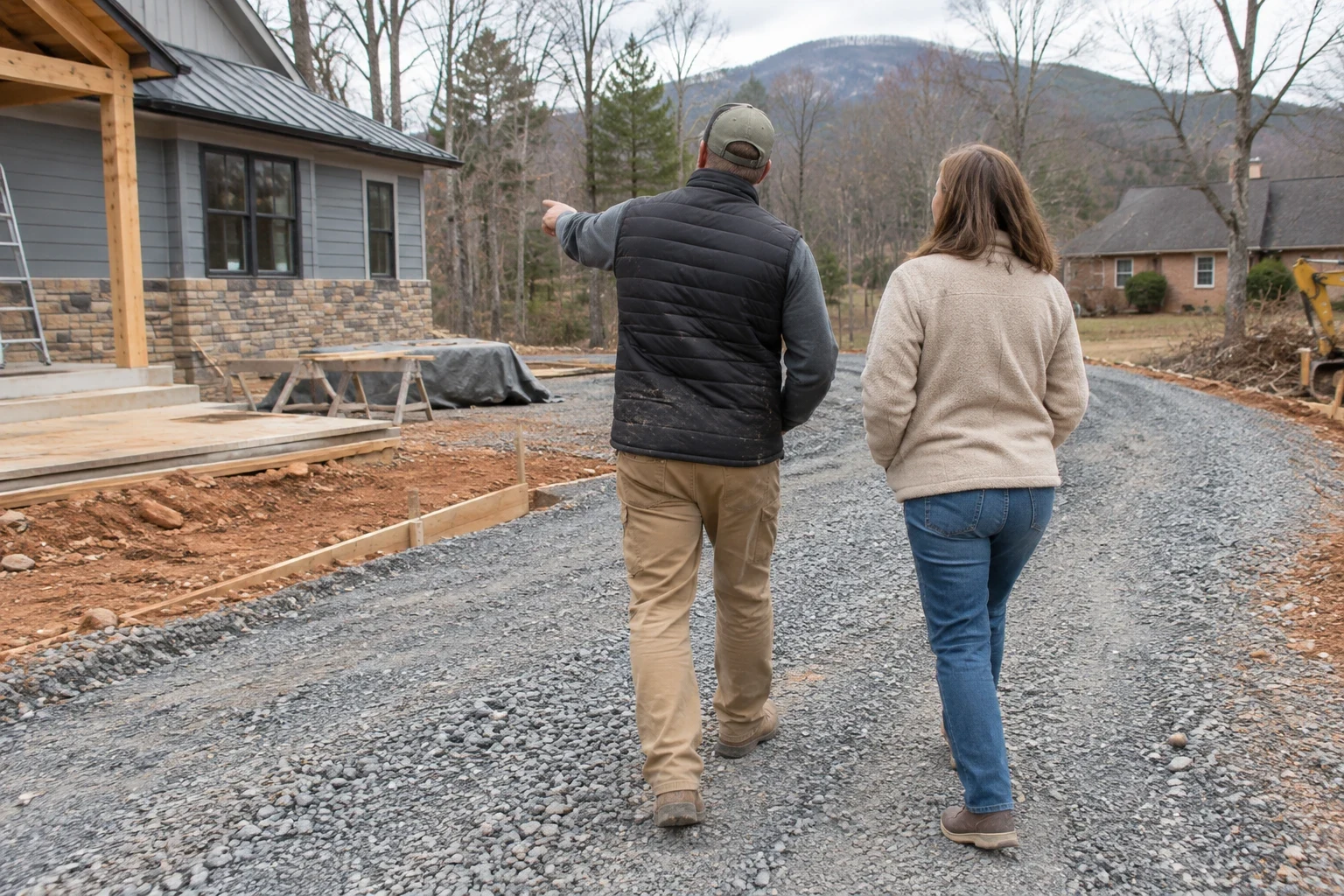
Walk the lot together
We look at where water comes from and where it goes, check soil and rock, and note access for equipment. You get a straight answer on what needs grading and what does not.
- 2
Plan, stakes and permits
We mark grades with stakes and string so you can see the plan on the ground. If the job needs a permit or an erosion control plan, we tell you up front and handle the paperwork.
- 3
Rough grading
Equipment cuts high spots and fills low ones. Fill goes in thin layers and gets compacted, which is what keeps a pad or driveway from sinking later.
- 4
Finish grade and stabilize
We fine-tune the slope, spread topsoil and put down seed and straw. We clean up the site and walk it with you before we leave.
Grading questions we hear often
Will grading fix my wet crawlspace?
Often, yes. If the ground slopes toward the house, regrading it to fall away is usually the first fix. If water is coming from a spring or a high water table, we will tell you that grading alone will not solve it.
Can you grade when it has been raining?
We can work in damp soil, but not saturated clay. Compacting wet clay leaves a soft base that settles later, so we wait a few dry days when we need to. We would rather move the date than redo the work.
Do I need a permit for grading?
It depends on how much ground you disturb and where. Small yard fixes often need none, while a new home site usually does. We check before we start and pull what is required.
How long does a grading job take?
A drainage fix around an existing house can take a day or two. A house pad and driveway on a sloped lot can take a week or more, depending on rock and weather.
Do you also clear the lot?
Yes. We handle land clearing, then grading, then the foundation work, so one crew keeps the sequence right on a new build.
Is the grading work covered?
Yes. Our grading comes with a 1-year warranty on workmanship. If the slope we set is not draining as planned in that time, call us and we will come look.
Find out what your lot needs
Tell us where the water goes and what you want to build. On a project consultation we walk the ground with you and give you a plain answer on grading and cost.